
Ireland’s history is rich with poets, rebels, and statesmen whose names echo through time. But beyond the familiar legends lie individuals whose legacies, though profound, remain less celebrated. These unsung Irish heroes—visionaries, reformers, and humanitarians—pushed boundaries, challenged injustice, and quietly built the Ireland (and world) we know today.
In this post, we shine a light on some of these remarkable figures, each leaving behind a legacy of courage, compassion, and conviction.
Kathleen Lynn – Doctor, Rebel, Humanitarian
Dr. Kathleen Lynn (1874–1955) was far more than a physician. She was a revolutionary, a suffragist, and the founder of St. Ultan’s Hospital for Infants, Ireland’s first hospital dedicated entirely to children’s health. Lynn served as Chief Medical Officer during the 1916 Easter Rising, proving that her fight for freedom was as fierce as her battle against poverty and disease.
She spent her life advocating for public health reforms, particularly for women and children in disadvantaged communities. Though overshadowed in history books, Lynn’s work saved countless lives and set a foundation for modern Irish healthcare.
Shay Cullen – The Priest Who Took on Exploitation
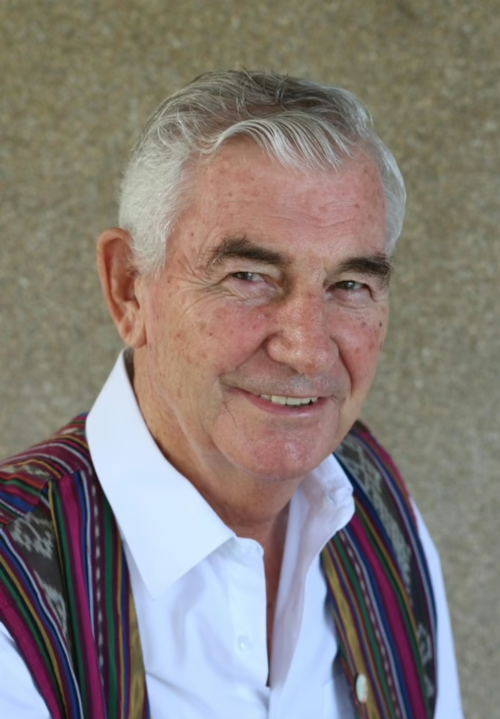
Fr. Shay Cullen (b. 1943) may not be a household name in Ireland, but in the Philippines, he is a beacon of hope. A Columban missionary, Cullen co-founded the PREDA Foundation, which rescues and rehabilitates victims of child abuse and human trafficking.
He has fought powerful criminal networks, often putting himself at great personal risk. His work has been internationally recognised, yet his tireless efforts for justice and children’s rights deserve greater recognition at home.
. CC by SA 2.0
Mary Robinson – A President of Firsts
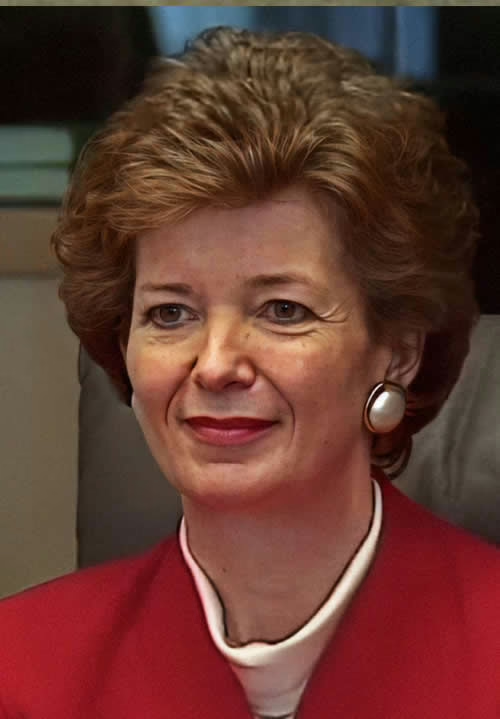
When Mary Robinson (b. 1944) was elected as Ireland’s first female president in 1990, it marked a watershed moment. Robinson transformed the presidency from a ceremonial role into a platform for progressive ideas, human rights, and international engagement.
She later became United Nations High Commissioner for Human Rights, using her voice to champion climate justice and global equality. Often described as the “moral conscience of Ireland,” Robinson paved the way for women in politics and remains one of the most respected Irish leaders on the world stage.
John Hume – The Architect of Peace
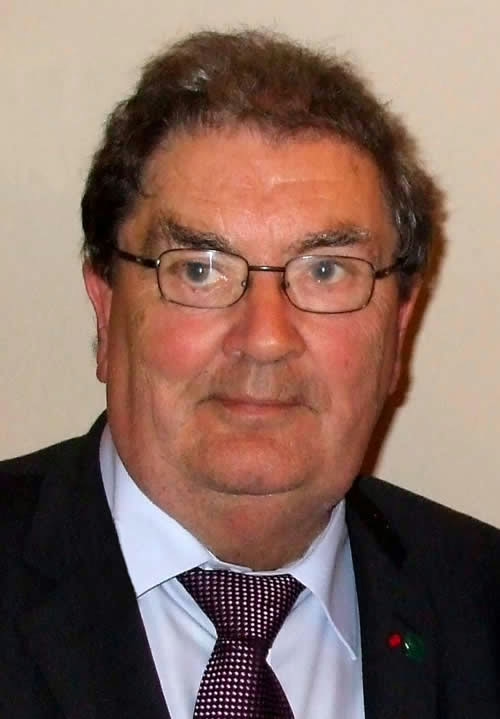
John Hume (1937–2020) may be best remembered in Northern Ireland, but his work resonates globally. A co-founder of the Social Democratic and Labour Party (SDLP), he was central to the peace process that culminated in the Good Friday Agreement.
Awarded the Nobel Peace Prize, Hume was praised for his unwavering commitment to non-violence and dialogue. His vision of reconciliation between communities helped steer Ireland towards peace, making him one of the true architects of modern Irish unity.
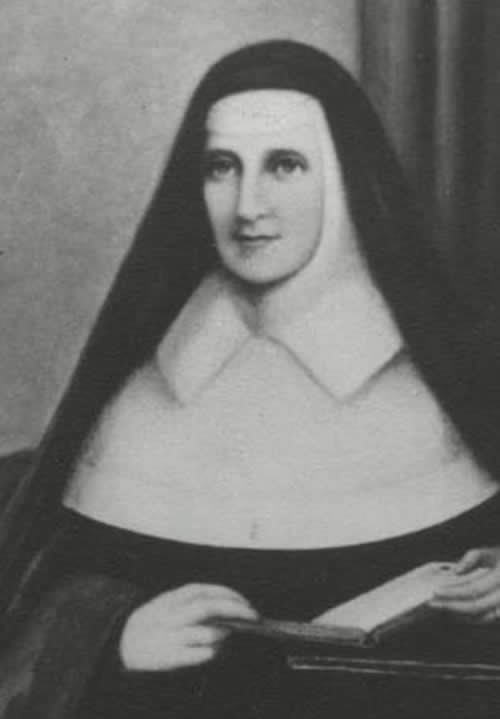
Catherine McAuley – A Quiet Revolution in Education
In the 19th century, Catherine McAuley (1778–1841) founded the Sisters of Mercy, an order dedicated to the education of poor children and care of the sick. At a time when women had little agency, McAuley built schools and hospitals across Ireland, laying the groundwork for social change through compassion and education.
Her mission was practical yet radical: to give dignity and opportunity to the most marginalised. Today, Mercy schools and hospitals continue her vision around the world.
Other Unsung Heroes Worth Remembering
While these names stand out, countless others shaped Ireland in quieter ways. Some deserve special mention:
- Rosie Hackett (1892–1976) – Trade unionist and 1916 participant, she fought tirelessly for workers’ rights, especially women in Dublin’s factories.
- Frank Duff (1889–1980) – Founder of the Legion of Mary, one of the world’s largest lay Catholic organisations dedicated to charity and service.
- Nano Nagle (1718–1784) – Known as “the Lady with the Lantern,” she risked imprisonment to teach impoverished Catholic children in Penal-era Ireland.
Why Their Stories Matter
These heroes share a common thread: they used their voices, skills, and convictions to challenge the status quo. They may not all have statues or streets named after them, but their impact is woven into Ireland’s cultural, social, and moral fabric.
By remembering their contributions, we don’t just honour the past—we inspire future generations to act with courage and compassion.


