


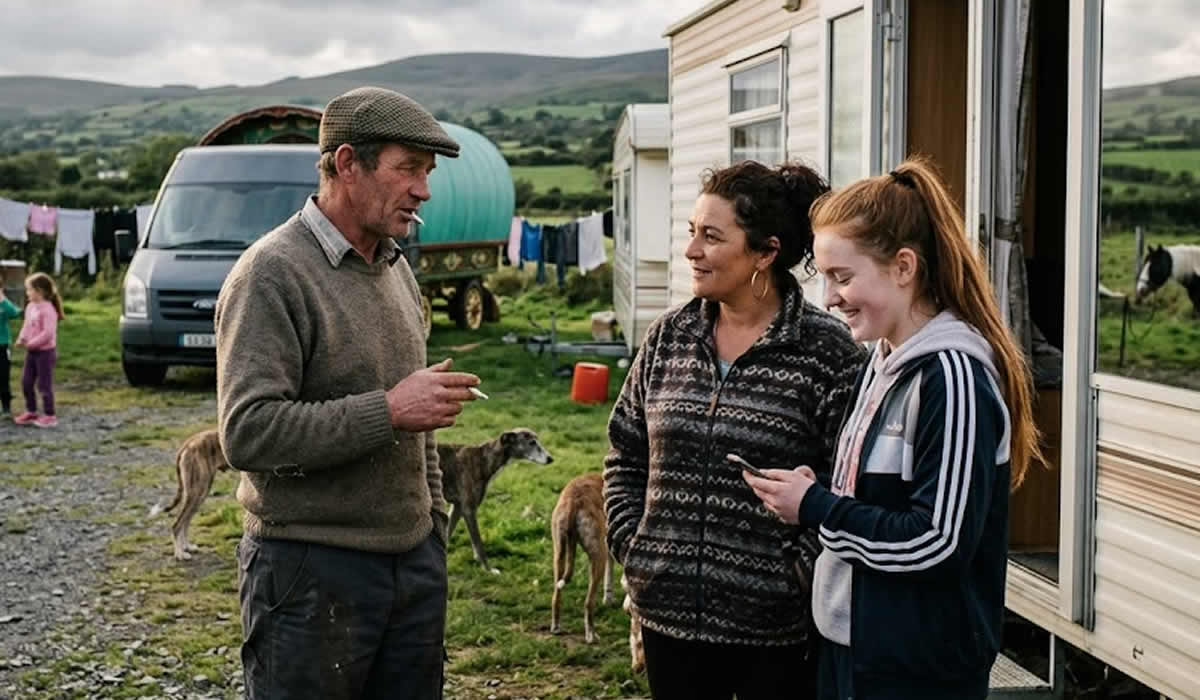
Few groups in Ireland generate as much controversy, debate and public division as the Irish Traveller community. Discussions around Travellers often become highly polarised, with some people accusing the State and media of downplaying serious criminality and anti-social behaviour, while Traveller advocacy groups argue that an entire ethnic minority is unfairly judged by the actions of a minority.
The reality is more complex, and often uncomfortable for both sides.
Irish Travellers make up less than 1% of Ireland’s population, yet official and academic figures show they are heavily overrepresented in Irish prisons, experience extremely high unemployment rates and are frequently associated in public discussion with organised feuding, rogue trading scams and welfare dependency.
At the same time, Travellers also experience some of the worst housing conditions, educational outcomes and suicide rates in the country.
Prison Numbers and Crime Statistics
One of the most debated issues surrounding Travellers is their overrepresentation in Ireland’s prison system.
Research presented at prison reform conferences and justice initiatives found Travellers account for around 10% of the male prison population and more than 20% of the female prison population, despite making up roughly 0.7% of Ireland’s total population.
An academic study also estimated that Traveller men are more than 17 times more likely to be imprisoned than settled Irish men.
Critics argue these figures reflect entrenched criminality within parts of the community, including theft, intimidation, violent feuds, handling stolen goods, illegal dumping and organised scams.
Traveller representatives and advocacy groups argue poverty, addiction, exclusion, poor education and generational social problems are major contributors to these statistics.
The “Tarmacadam Gang” Reputation
Traveller-linked tarmac and driveway scams have become infamous across both Ireland and the United Kingdom.
In these schemes, rogue traders pressure homeowners, often elderly people, into paying large sums for poor quality or unnecessary driveway and paving work.
Irish and British police forces have repeatedly issued public warnings over the years about these operations.
Although not all Travellers are involved in such scams, the issue has become strongly associated with certain Traveller families and criminal networks.
Animal Welfare and Horse Controversies
Traveller culture has historically maintained strong traditions involving horses, sulky racing and dog breeding. However, animal welfare organisations have repeatedly criticised cases involving abandoned horses, illegal grazing, puppy farming and neglected animals.
Cases involving malnourished horses and illegal dog breeding operations have regularly appeared before Irish courts.
Many Travellers reject the idea that animal cruelty is unique to their community, arguing that similar cases involving settled people receive far less media attention.
Unemployment and Welfare Dependency
Official figures from Ireland’s Central Statistics Office showed Traveller unemployment rates exceeding 80% in Census 2016 data.
This remains one of the most severe employment gaps affecting any social group in Ireland.
Traditional Traveller trades such as scrap dealing, horse trading and market trading have declined heavily over recent decades, while low educational attainment continues limiting opportunities for many younger Travellers.
Critics argue welfare dependency has become normalised within parts of the community. Traveller organisations respond that discrimination in hiring and schooling continues to severely affect employment opportunities.
Feuds, Violence and Public Fear
Violent feuds involving Traveller families have repeatedly shocked Ireland.
Some disputes have escalated into shootings, stabbings, arson attacks and large-scale public disorder. Certain feuds have stretched across generations and even spread into Britain.
Bare-knuckle boxing, although illegal when organised commercially, also remains associated with parts of Traveller culture and has gained widespread exposure online and in documentaries.
These incidents have contributed heavily to negative public perceptions of Travellers, particularly in areas affected by intimidation or violence.
Recent High-Profile Cases in the News
Recent years have seen several major criminal investigations involving Traveller-linked feuds and violent incidents dominate Irish headlines.
One of the most shocking cases was the murder of 23-year-old mother Ashling Murphy in County Tipperary, a case that reignited debate around violent crime, sentencing and public safety in Ireland.
Other high-profile incidents involving Traveller feuds and organised violence have included:
- Violent Traveller feud incidents in Limerick
- Traveller feud-linked shootings investigated by Gardaí
- Court proceedings involving organised Traveller feuds
Critics argue such incidents reinforce long-standing public fears around organised violence and intimidation linked to certain families. Others warn that media coverage often paints the entire Traveller community through the actions of its worst elements.
Living Conditions and Segregation
Despite criticism directed at the community, living conditions in some Traveller sites remain extremely poor.
Reports over the years have documented overcrowding, sanitation problems, illegal dumping and infestations on some halting sites.
Many Traveller families continue preferring close-knit extended family living arrangements rather than integration into standard housing estates, which can create tensions with local authorities and nearby residents.
At the same time, opposition from settled communities toward new Traveller accommodation developments continues fueling mistrust on both sides.
A Community Seen Through Extremes
Public opinion on Irish Travellers often swings between two extremes.
One side views criticism of Traveller criminality or anti-social behaviour as ethnic prejudice. The other believes politicians, media organisations and public institutions are reluctant to openly discuss persistent problems associated with parts of the community.
The reality is that discrimination and serious social problems can both exist at the same time.
Many Travellers live law-abiding lives and want better opportunities for younger generations. Equally, prison statistics, violent feuds and organised criminality are not imaginary issues.
The debate around Irish Travellers remains one of the most sensitive and unresolved social issues in modern Ireland.


