
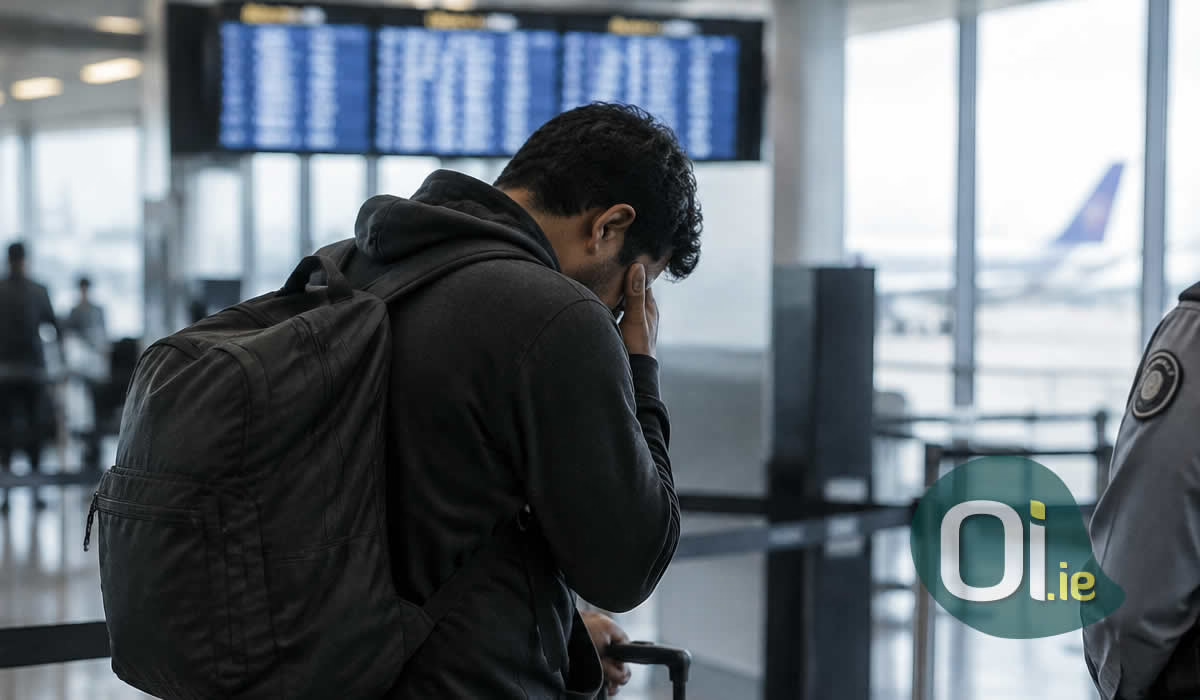
Ireland is offering financial assistance to some migrants who agree to leave the country voluntarily, with grants reaching thousands of euros in certain circumstances. The programme has attracted attention because it means the Government is spending public money to help people return to their home countries, rather than relying entirely on deportation.
But who actually qualifies, and does this mean Brazilians living and working in Ireland could be offered money to go home? The answer is more complicated than the headline suggests. Ireland is not paying people simply because they are foreign nationals or because they have decided to leave.
What is Ireland’s voluntary return scheme?
The Department of Justice operates a programme known as the Voluntary Returns Programme. It is designed to help people who do not have legal permission to remain in Ireland, including people who have withdrawn an international protection application or received a refusal.
Rather than waiting for the State to enforce their departure, eligible individuals can agree to return to their country of origin voluntarily. Depending on their circumstances, the Government may pay for their flights, help arrange travel documents, provide transport to the airport and offer financial assistance to help them establish themselves after returning home.
The programme is not new, but the Government increased the financial incentives in September 2025 to encourage more people to leave voluntarily, particularly those involved in the international protection process.
The official eligibility rules and payment details are available through the Irish Immigration Service’s voluntary returns programme.
How much money is Ireland offering?
The amount depends on when someone applied for international protection and at what stage of the process they decide to leave. The higher payments were introduced as a temporary incentive for people who had applied before 28 September 2025.
The published payment levels include:
| Applicant’s circumstances | Individual | Family |
|---|---|---|
| Applied for international protection before 28 September 2025 and leaves before the first decision | Up to €2,500 | Up to €10,000 |
| Leaves before the appeal decision | Up to €1,500 | Up to €6,000 |
| Leaves after the final decision | Up to €1,200 | Up to €3,000 |
| Applied after 28 September 2025 | Up to €1,200 | Up to €2,000 |
| Undocumented and without a deportation order | Up to €1,200 | Up to €2,000 |
These are maximum amounts, not automatic payments. The higher incentives are restricted to the earlier group of international protection applicants, while the standard assistance remains available to eligible people who applied later or who are undocumented without a deportation order.
It is also important to understand that the entire grant is not necessarily handed over as cash at the airport. Part may be provided through a prepaid debit card, while the remainder can be supplied in kind to support things such as setting up a small business or attending an education course after returning home.
Does the scheme apply to Brazilians?
Yes, it can apply to Brazilian citizens, but it does not apply to all Brazilians living in Ireland.
A Brazilian who has overstayed a visa, has no valid immigration permission, or has withdrawn or received a refusal of an international protection application may be eligible, provided they meet the programme’s conditions and do not fall within its exclusions.
However, a Brazilian who is legally living in Ireland with a valid employment permit, Stamp 1, Stamp 2, Stamp 4 or another valid immigration permission is not eligible simply because they are Brazilian or decide they would prefer to return home.
The distinction is between someone who has a legal right to remain and someone who does not. The scheme is intended to assist the latter group, not to encourage people with valid permission to abandon their lives in Ireland.
There is already evidence that Brazilians have used the programme. According to figures reported by The Irish Times in April 2026, 420 Brazilians applied for assistance to return home during 2025. That was among 2,315 applications from people of different nationalities recorded during the year.
Those 420 applications should not be confused with 420 confirmed departures or 420 payments. Applications, approvals and completed voluntary returns are different measures.
Why is the Irish Government paying people to leave?
The main reason is that voluntary returns are generally easier and less expensive to arrange than enforced deportations.
When someone has no right to remain in Ireland, the State has to deal with their departure. If they refuse to leave, the authorities may have to arrange travel documents, organise escorts, coordinate flights and carry out other enforcement measures. This can be expensive and complicated, particularly when someone does not cooperate or their country of origin is difficult to reach.
The Government has repeatedly described voluntary return as its preferred option because it allows people to leave without the need for a forced removal operation. It also avoids some of the practical difficulties associated with detention and escorted deportations.
There is a financial argument too. In a parliamentary response on 8 October 2026, the Minister for Justice provided figures showing that 1,616 people left Ireland through voluntary returns in 2025, compared with 934 in 2024.
The figures for 2026 showed a further 1,264 voluntary returns by the time of the parliamentary response. The Department reported programme costs of approximately €1.08 million for the first six months of 2026, including reintegration assistance and administration.
The figures are published in the Oireachtas parliamentary response on voluntary returns.
How much is the scheme costing taxpayers?
The programme has become more expensive as the number of people using it has increased.
According to the figures supplied to the Oireachtas, the total cost of the Department’s voluntary return schemes was:
| Year | Total programme cost |
|---|---|
| 2024 | €1,063,899.89 |
| 2025 | €1,772,121.40 |
| 2026, first and second quarters | €1,079,655.28 |
These figures include reintegration assistance and administrative costs. They are not simply a total of the cash grants paid to people leaving Ireland.
The Irish Times separately reported that spending in 2025 was approximately €1.61 million, based on figures it obtained from the Department. The difference between published figures reflects the timing and scope of the information being reported, so the Oireachtas figures above are the more recent official series for the Department’s programme costs.
The Government’s argument is that paying for voluntary departures can be more cost-effective than enforcing removals. Whether the programme represents good value for money ultimately depends on the cost of the assistance compared with the cost and practical difficulty of deporting the same individuals.
Could this encourage people to come to Ireland and then take the money to leave?
It is a reasonable question. If someone knows that Ireland may pay them to return home, could that become an incentive to travel here in the first place, even without a genuine intention to stay?
The Government has attempted to limit that possibility by restricting the higher payments to people who had already applied for international protection before 28 September 2025. Someone arriving now cannot make a new protection application and qualify for the larger early-departure incentive.
The standard voluntary return assistance is still available to some people who apply after that date or who are undocumented, but it is not a general payment offered to anyone who arrives in Ireland and changes their mind. The scheme is available only in specific immigration circumstances, can be used once, and requires the person to leave the State.
There is also an important distinction between an incentive to leave and an incentive to come. The grant is intended to help someone who is already in Ireland and has no legal basis to remain to return home. It does not provide a legal route into Ireland, a visa, or a right to remain.
There is no evidence in the published figures that the payments have caused people to come to Ireland in order to claim them. The figures show how many people applied for assistance or completed voluntary returns, but they do not establish why those people originally travelled to Ireland.
Is voluntary return the same as deportation?
No. The two processes have different legal consequences.
Under voluntary return, the individual agrees to leave before a deportation order is issued. They travel without being forcibly escorted, may receive assistance with their journey and can potentially apply to return to Ireland in the future if they establish a lawful basis to do so.
A deportation order, on the other hand, is an enforced legal requirement to leave the State. It can have serious consequences for future immigration applications and the person’s ability to return.
This is one reason the Government prefers voluntary departures. It gives people an opportunity to leave before enforcement action becomes necessary, while reducing the administrative burden on the State.
However, voluntary return is not an option for everyone. The programme excludes certain people considered a danger to State security or those convicted of particularly serious crimes who pose a danger to the community. A person who already has a deportation order cannot use the programme.
What happens if someone refuses to leave?
Voluntary return is an option, not a way to avoid the immigration system indefinitely.
Where an international protection application has been refused and the appeals process has been exhausted, the person may be offered the opportunity to return voluntarily. If they do not take that option, the State can proceed with the relevant immigration enforcement measures, including issuing a deportation order.
The Government has increased its focus on deportations as well as voluntary returns. The two policies work together: one encourages people without permission to leave voluntarily, while the other provides a mechanism for enforcing departures when they do not.
What does this mean for Brazilians living in Ireland?
For the large Brazilian community in Ireland, the most important point is that this programme is not a general offer to pay foreign residents to leave. Brazilians who are working, studying or living in Ireland with valid immigration permission are not being targeted by the scheme.
However, Brazilian citizens who have become undocumented or whose international protection applications have been refused may be eligible for assistance if they choose to return home voluntarily. The 420 Brazilian applications recorded in 2025 show that the programme is relevant to a section of the Brazilian population, even though it does not apply to the community as a whole.
Ireland is effectively paying some people to leave because the Government considers voluntary departure a more manageable and potentially cheaper alternative to forced deportation. Whether the financial incentives are sufficient to change behaviour, and whether the programme delivers value for taxpayers, are questions that will continue to attract scrutiny as the number of departures increases.


