
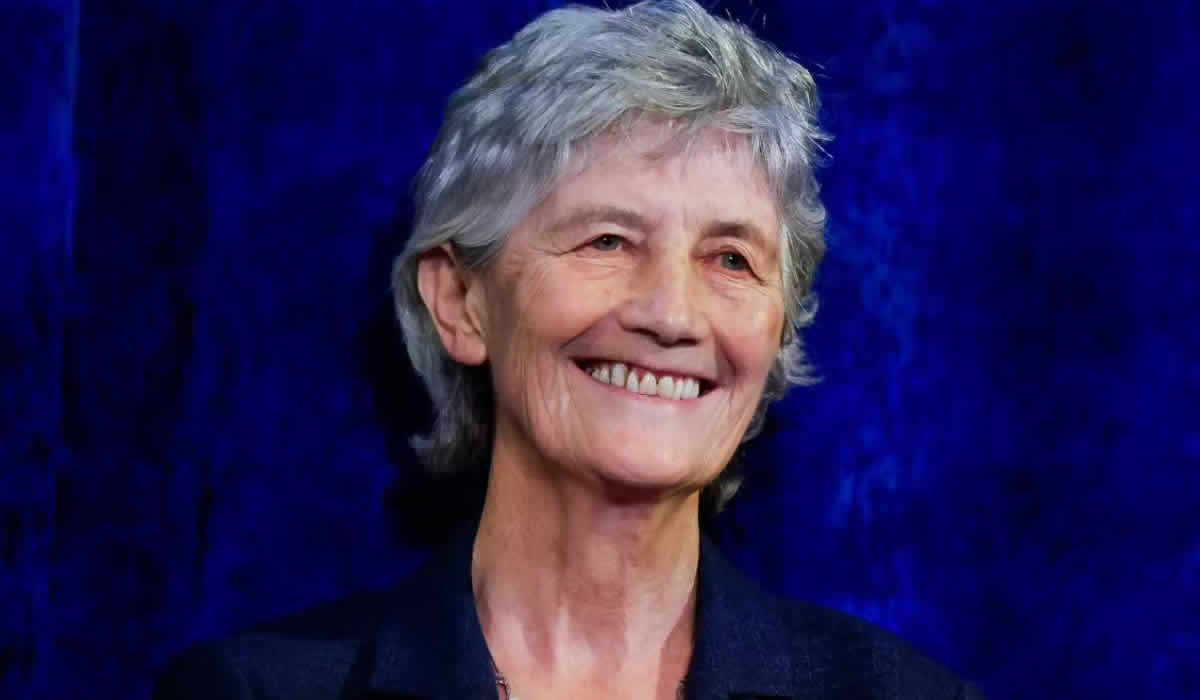
On 25 October 2025, Ireland elected Catherine Connolly as its tenth President, winning around 63 percent of first-preference votes in what became effectively a two-person contest. Connolly, 68, is a former barrister and long-time independent politician from Galway, whose campaign emphasised inclusion, social justice, climate action, and a stronger voice for marginalised citizens.
Her Background and Persona
Connolly first entered national politics as a Teachta Dála (TD) in 2016, having earlier served on Galway City Council. Once a member of the Labour Party, she later pursued an independent political path rooted in community activism. Throughout her campaign, she presented herself as a “listening president” — someone who would bring empathy, reflection, and accountability to Áras an Uachtaráin.
Controversies and Criticisms
While Connolly’s integrity and independence won admiration, her political record also drew scrutiny. Critics pointed to her 2018 visit to Syria, questioning the optics of meetings with regime-linked officials. Others highlighted her past legal work for banks in repossession cases, arguing this clashed with her social-justice image.
Beyond her personal controversies, the election process itself became a subject of debate. Several commentators criticised the narrowing of the race to just two viable candidates — Connolly and Heather Humphreys — after others withdrew or failed to secure nominations. Voter frustration was reflected in a record number of spoiled ballots, with over 200,000 deemed invalid in protest or disillusionment.
Political Alignment and Influences
Although running as an independent, Connolly’s campaign resonated strongly with Ireland’s progressive and left-leaning voters. Her message of social equality, neutrality, and human rights continues the moral tone set by former presidents Mary Robinson and Michael D. Higgins. Analysts expect her presidency to blend constitutional formality with a deeper engagement in ethical and humanitarian discourse.
Hopes and Challenges Ahead
Connolly has pledged to serve as “a president for all,” using her platform to highlight issues like housing, climate responsibility, and Ireland’s global role as a neutral and compassionate state. While the presidency carries limited executive power, its symbolic authority can shape national conversation — and Connolly’s supporters hope she will use that influence to bridge social divides and restore public trust in politics.
Election Rules and Process
The President of Ireland serves a seven-year term, renewable once. Candidates must be Irish citizens aged at least 35 and nominated by either 20 members of the Oireachtas (parliament) or four local authorities. The vote uses the Single Transferable Vote (STV) system, allowing voters to rank candidates by preference. Any Irish citizen aged 18 or older, resident and registered in Ireland, is eligible to vote.
The presidents home in Ireland
The official residence of the President is Áras an Uachtaráin, located in Dublin’s Phoenix Park. Members of the public can join free guided tours most Saturdays, visiting the state rooms and gardens where many key national ceremonies take place. Tickets are available on a first-come, first-served basis at the Phoenix Park Visitor Centre, and photo ID is required.


