
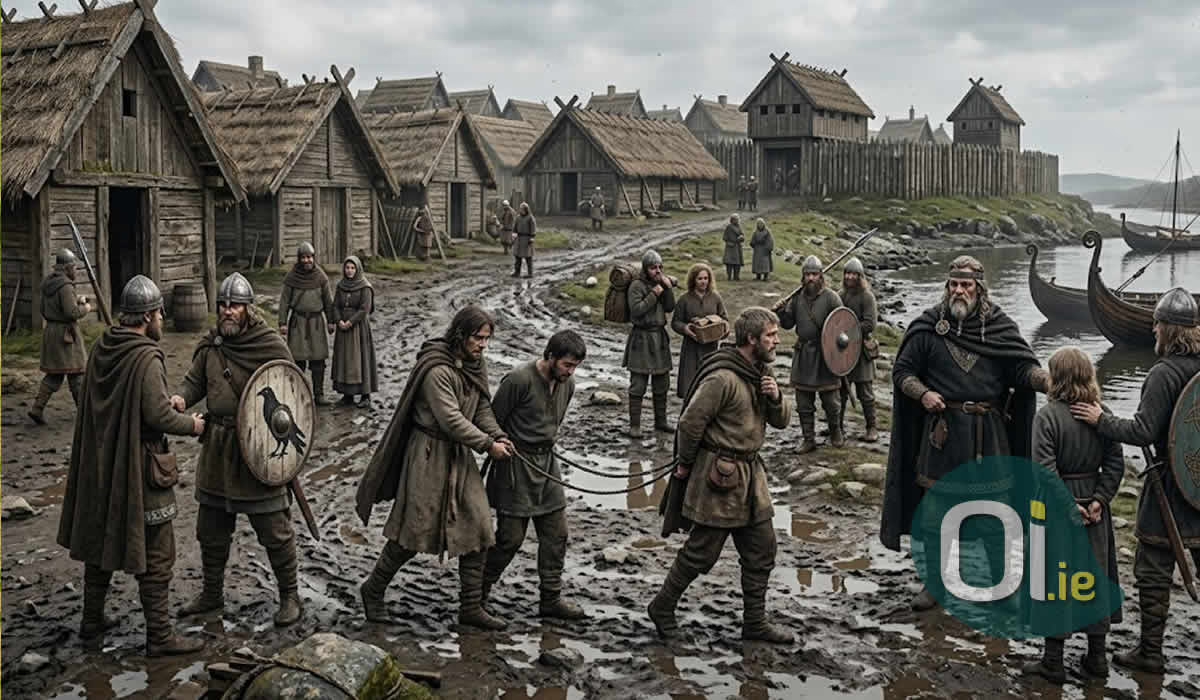
Dublin was not a “slave capital” in the modern sense, but in the Viking age it was one of the busiest slave-trading cities in western Europe. Its early wealth was tied not just to trade and raiding, but to the buying and selling of human beings.
What “the Norse” means
The Norse were the Scandinavian Vikings from places like Norway, Denmark, and Sweden. In simple terms, they were seafaring people from northern Europe who raided, traded, settled, and built towns across the Atlantic world.
Were the Irish themselves slaves?
Yes, Irish people were among those captured and sold. Slavery in early medieval Ireland was not limited to foreigners, and prisoners from Irish conflicts could be enslaved and traded.
The slave trade in Dublin drew on warfare, raids, and local power struggles, so the victims were not all outsiders. Some were taken from Ireland itself, while others came from Wales and Scotland.
Where were slaves sold to?
Dublin was a key export point in a wider Viking network. Enslaved people were sold onward across the Irish Sea and beyond, especially into Scandinavia and other parts of the Norse world.
That wider world stretched from Ireland to Iceland and the northern coasts of Europe, so Dublin acted like a grim marketplace feeding an international system.
What happened to them?
Many enslaved people were forced into hard labour, while others were shipped far from home and absorbed into households, farms, or settlements across the Viking world. Some would have been kept in the places where they were sold, while others were moved again through trade networks.
For many, the records stop there, because enslaved people rarely appear in history as named individuals. That silence is part of the cruelty of the system.
Did Irish communities form abroad?
Yes, in some cases Irish people ended up abroad through slavery, migration, exile, or military service, and traces of Irish identity can be found in parts of Britain and the wider North Atlantic world. But it is important not to overstate a direct line from medieval slavery to modern Irish communities overseas.
Some settlements and family lines abroad may include descendants of people from Ireland, but most of these histories are mixed, layered, and not always traceable to slavery alone.
Why Dublin mattered so much
Dublin’s location made it ideal for trade. It sat on a sea route linking Ireland, Britain, and Scandinavia, which allowed captives and goods to move quickly.
By the 11th century, historians describe Dublin as one of the major slave markets in western Europe, and for a time possibly the biggest in the region.
The brutal engine behind the city
The trade grew because war created captives. Viking raids, Irish rivalries, and political instability all fed the system.
That means Dublin’s early success was not just about commerce. It was also built on violence, forced labour, and human trafficking.
Why this history still matters
This part of Irish history is often forgotten because it does not fit the usual romantic image of medieval Dublin. But it is an important reminder that cities can grow rich from deeply cruel systems.
The story is uncomfortable, but it is real: Ireland was not only a land raided by slave traders. In some periods, it was also part of the machinery that sold human beings onward.


