
Ireland is dotted with the remains of places that were once home to families, farmers, fishermen and entire communities. Some were abandoned during the Great Famine, while others disappeared because of eviction, emigration, changing farming practices or simply the decline of the communities that depended on them.
Today, some of these places are little more than roofless stone cottages, old walls and overgrown tracks. Yet walking through them can give a remarkable glimpse into a very different Ireland.
The Deserted Village of Slievemore, County Mayo
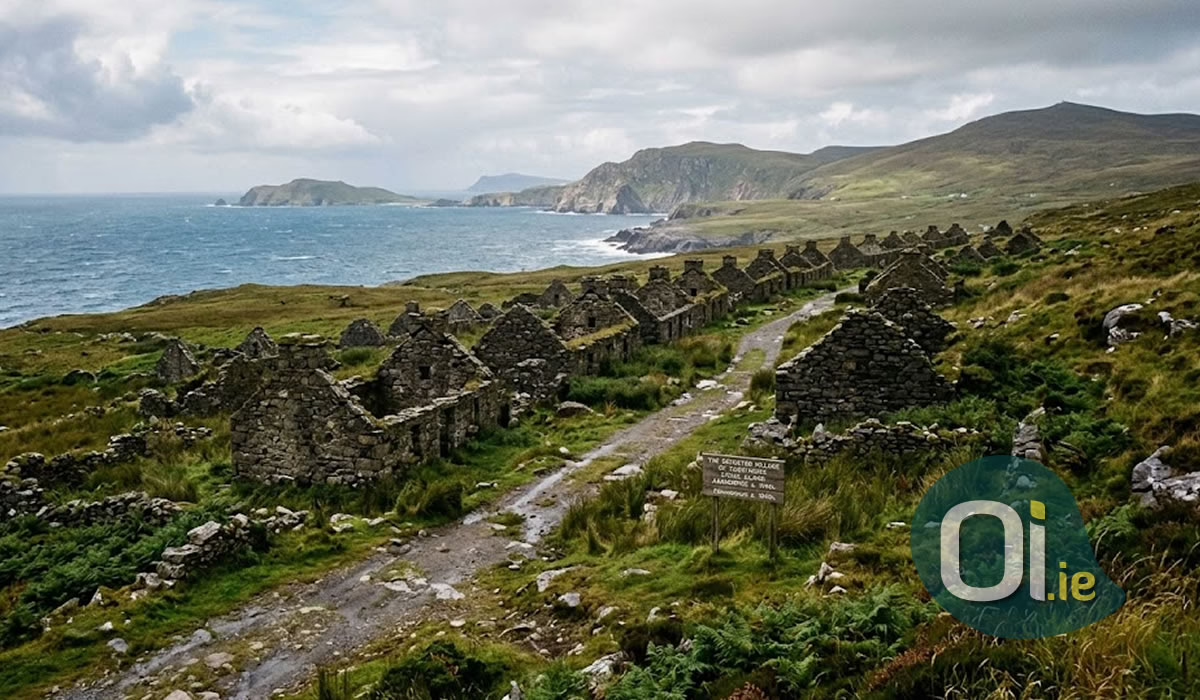
On the slopes of Slievemore in County Mayo lies one of Ireland’s most famous abandoned settlements.
The Deserted Village consists of dozens of ruined stone cottages stretching along the mountainside. Archaeological investigations have identified a substantial settlement, with the remains extending for roughly 1.5 kilometres.
The cottages were extremely basic. Many consisted of a single room where people cooked, slept and carried out their daily lives. Around the settlement are the remains of old fields and the distinctive ridges known as lazy beds, which were used to grow crops such as potatoes.
The village was not simply abandoned overnight when the Great Famine began.
The Famine had a devastating effect on the community, and many families left for nearby coastal settlements such as Dooagh, while others emigrated. The settlement subsequently became associated with a traditional form of seasonal farming known as booleying.
For generations, families continued to use the old houses during the summer while bringing livestock onto the mountain to graze. This practice continued into the 20th century, with the cottages reportedly still being used as seasonal accommodation into the 1940s.
That makes Slievemore particularly interesting. It was not simply a village that was abandoned and forgotten. Its buildings continued to have a purpose long after permanent settlement had ended.
The Ghost Village of An Port, County Donegal
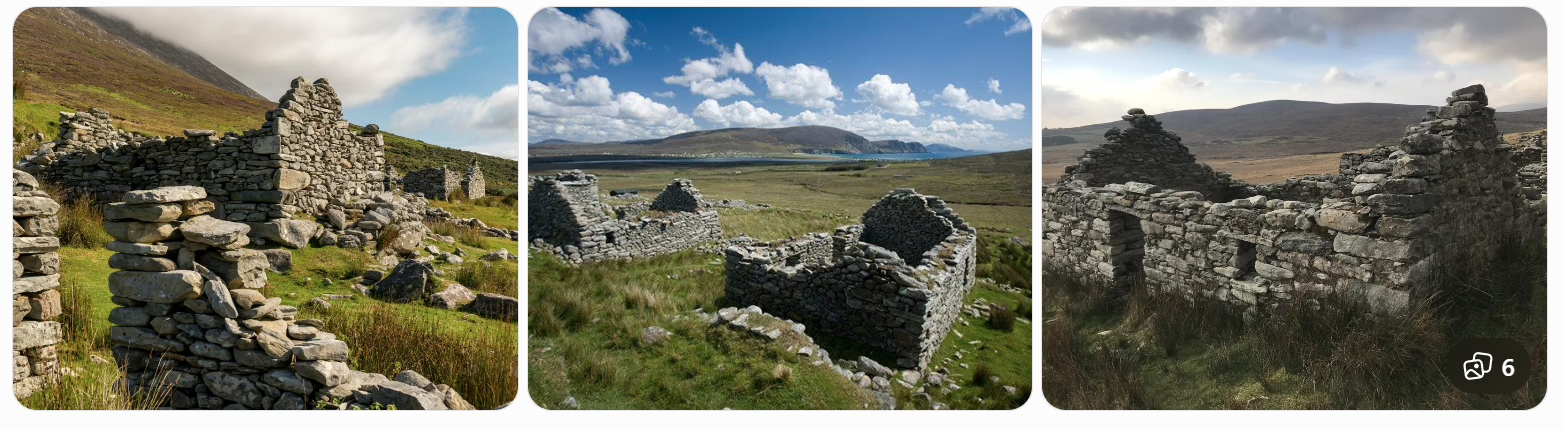
On the rugged coastline near Glencolmcille in County Donegal is another settlement that has become known as a ghost village.
An Port sits in an isolated coastal landscape, with ruined cottages overlooking the Atlantic.
The settlement is associated with Donegal’s maritime history and is believed to have been abandoned around the period of the Great Famine. Today, the remains of the old cottages sit in an environment that feels remarkably remote.
Unlike a conventional town with streets and shops, settlements such as An Port were closely connected to the landscape around them. People depended on farming, fishing and the resources available in their immediate surroundings.
When those systems became increasingly difficult to sustain, communities could disappear surprisingly quickly.
The Deserted Village at Keem, Achill
Achill has more than one abandoned settlement.
Near Keem Bay are the remains of another pre-Famine village, providing another reminder that the island once supported communities in places that today appear almost impossibly remote.
Archaeological investigations have found evidence of houses, fields and earlier activity in the area. The village appears to have been abandoned around the middle of the 19th century.
Accounts from the period describe the cottages becoming grass-covered and silent.
Some of the ruins were later dismantled, with stones reused elsewhere. This was not unusual. For people living in difficult economic circumstances, an abandoned building could provide a valuable source of stone for another house, wall or farm building.
That means some Irish ghost villages have gradually disappeared twice: first as living communities and later as archaeological sites.
A Deserted Village on Barnavave, County Louth
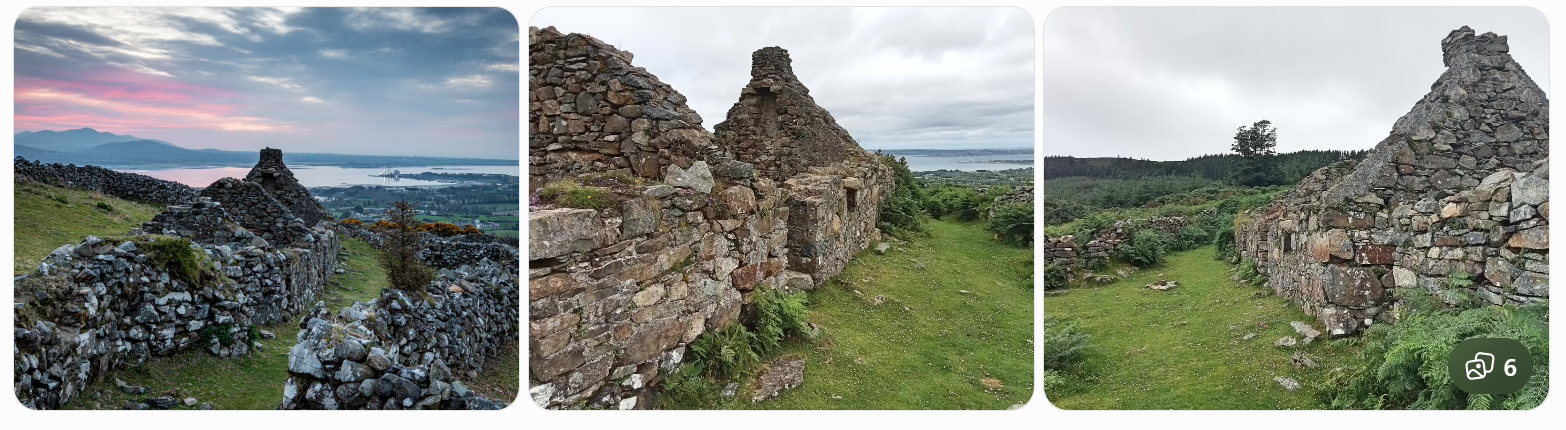
The Cooley Peninsula also contains evidence of abandoned settlement.
On the slopes of Barnavave near Carlingford are the remains of a deserted village, including ruined farm buildings, stone walls and abandoned agricultural ground.
The settlement occupied relatively marginal land on the mountainside. Archaeological and landscape evidence suggests that the community was probably abandoned around the time of the Great Famine.
What makes the site particularly interesting is how much of the old agricultural landscape remains visible.
The stone walls and abandoned fields reveal how much effort earlier communities put into making difficult land productive.
Today, vegetation has reclaimed much of the area, but the outlines of the old settlement remain visible.
Rindoon, County Roscommon
Not every Irish ghost settlement is a collection of 19th-century famine cottages.
Rindoon, on the shores of Lough Ree in County Roscommon, is a much older abandoned settlement.
The ruins include a medieval castle and substantial defensive walls, along with the remains of a medieval town.
Unlike the tiny rural settlements associated with the Famine, Rindoon represents an earlier period of Irish history when fortified settlements played an important role in controlling territory and trade.
Walking through the remains today, it is possible to see how substantial the settlement once was.
Yet the town eventually declined and was abandoned, leaving its medieval ruins surrounded by countryside.
Clonmines, County Wexford
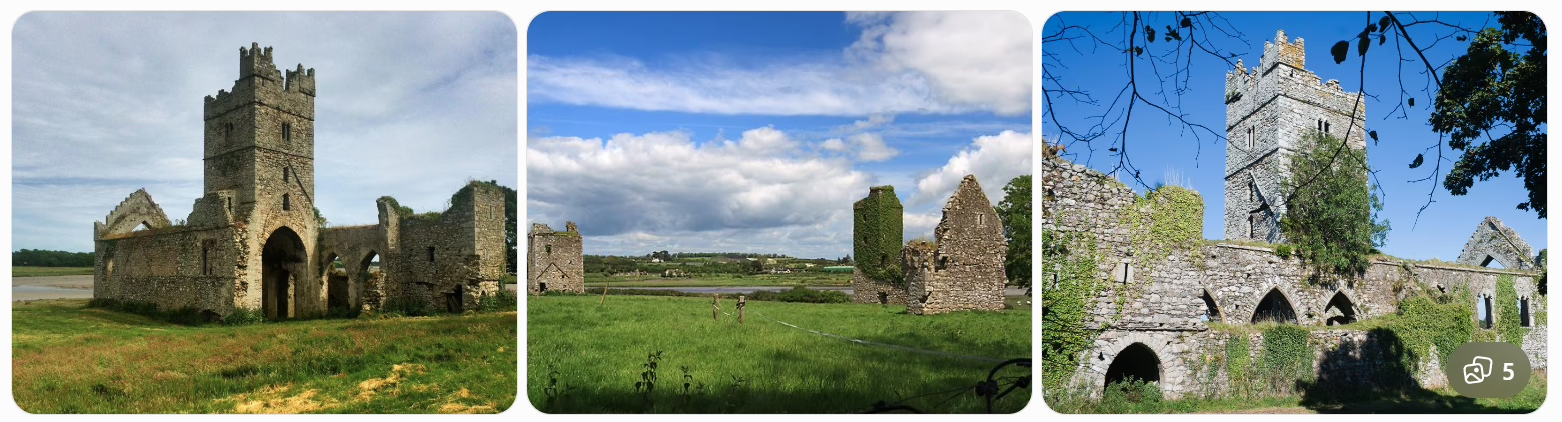
County Wexford has its own remarkable abandoned settlement at Clonmines.
Once a medieval settlement associated with trade and the local port system, Clonmines eventually declined.
Today, its ruins include churches, towers, houses and other medieval structures scattered through the landscape.
It is an excellent example of how an Irish “ghost town” does not necessarily have to be connected to the Great Famine.
Some settlements simply lost their economic importance.
Ports moved.
Trade routes changed.
Population patterns shifted.
And towns that had once been important could gradually disappear.
The Famine Created Hundreds of Forgotten Settlements
While the ruins that attract visitors today are often the most dramatic examples, there were countless smaller settlements that disappeared during and after the Great Famine.
The National Folklore Collection contains accounts of villages and houses that were abandoned during this period.
In one account from County Waterford, local folklore recorded that several villages that existed before the Famine had been reduced to a few houses or completely cleared.
Similar memories survive throughout Ireland.
In County Galway, folklore collected decades later recorded memories of entire villages being wiped out during the Famine.
In County Laois, people remembered districts that had once been several times more densely populated than they were when the folklore was collected. Ruined houses remained as physical reminders of communities that had disappeared.
These accounts are particularly fascinating because they show that the story of the Famine is not only about statistics.
In many places, it changed the physical landscape itself.
Houses became ruins.
Fields became overgrown.
Roads that had once connected communities became little more than tracks.
And family names disappeared from particular townlands.
Why Did Irish Villages Become Ghost Towns?
There was rarely a single reason.
The Great Famine was one of the biggest causes of population loss in 19th-century Ireland, but other factors were also important.
Emigration
Millions of people left Ireland during the 19th century, particularly during and after the Famine.
Many never returned.
When enough families left a particular settlement, the community could effectively disappear.
Eviction
Land ownership was another major factor.
Where landlords changed how land was used, tenants could be removed and settlements cleared. Some communities were replaced by larger farms or grazing land.
Changes in farming
Traditional farming systems could also decline.
Communities based on small plots and shared grazing were particularly vulnerable when agricultural practices changed.
Poverty
Some settlements were simply extremely difficult places to survive.
Remote mountain and coastal communities often depended on marginal land, small-scale farming, fishing and seasonal work.
A poor harvest could have catastrophic consequences.
Better opportunities elsewhere
Sometimes people left because another place offered a better chance of making a living.
A nearby town with employment, a coastal village with fishing opportunities or a new railway connection could gradually draw people away from an older settlement.
The Strange Thing About Ireland’s Ghost Villages
Perhaps the most fascinating thing about these places is how close the past remains to the surface.
In many countries, an abandoned settlement might disappear beneath a modern town or be swallowed by a forest.
In Ireland, old stone walls, ruined cottages, field boundaries and ancient tracks can survive for generations.
You can stand beside a ruined cottage and still see the field where its occupants grew potatoes.
You can follow an old track between houses.
You can see the remains of a fireplace.
And in some places, the landscape itself has changed surprisingly little.
That makes Ireland’s abandoned villages more than simply picturesque ruins.
They are pieces of evidence.
They tell us where people lived, how they farmed, what happened when communities collapsed and how dramatically Ireland’s population and landscape changed.
A Different Kind of Irish History
Ireland’s ghost towns are often described as eerie, mysterious or haunting, but their real stories are much more powerful than the ghost stories that sometimes surround them.
Behind every ruined cottage was a household.
Behind every abandoned field was somebody’s work.
And behind every deserted village was a community that once had its own routines, families, traditions and stories.
Places such as Slievemore, An Port, Keem, Barnavave, Rindoon and Clonmines offer a fascinating way to explore Irish history away from the better-known castles, battlefields and monuments.
They are reminders that Irish history is not only found in museums.
Sometimes, it is sitting quietly beneath the grass and moss, waiting beside an old stone wall for someone to notice it.


