
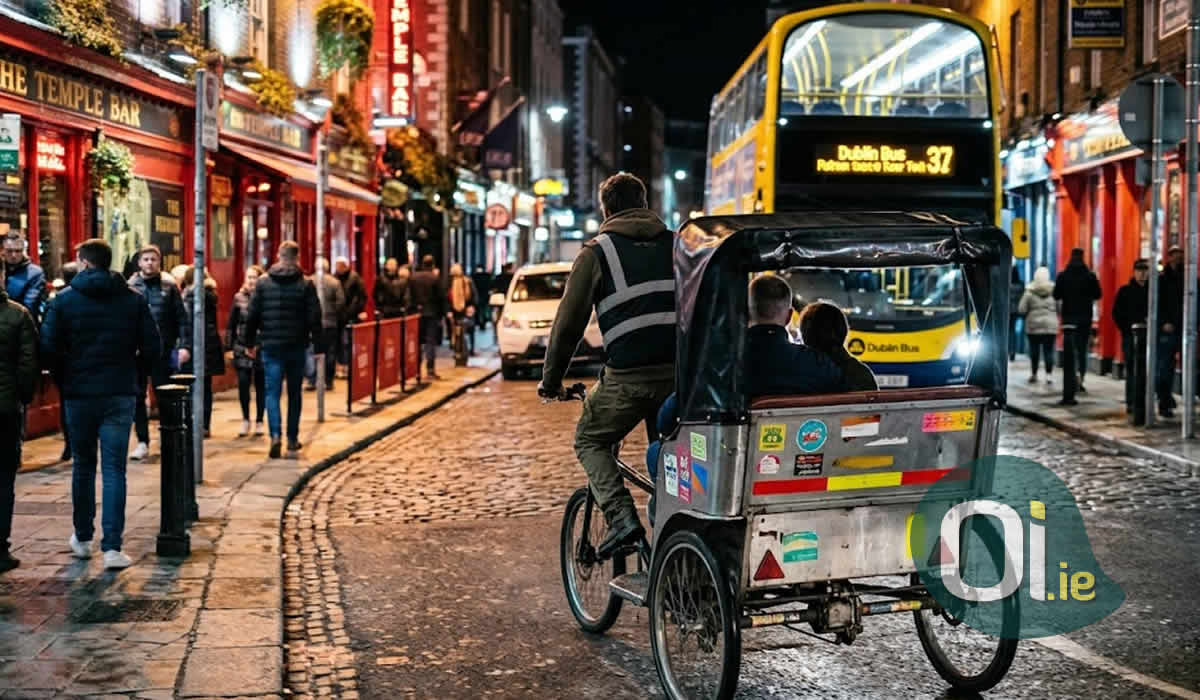
A 37-year-old Brazilian man has appeared before Dublin District Court charged with dangerous driving causing the death of Danielle O’Keane, a 37-year-old mother of two from Saval, Newry, County Down. The case relates to a horrific incident involving a rickshaw on Dublin’s North Wall Quay following a Westlife concert in September.
Gabriel Pereira, who lives in Dublin, is also accused of endangering the lives of three other women who were travelling in the rickshaw. The court heard that he had arrived in Ireland just eight days before the incident, which ultimately claimed Danielle’s life.
What happened after the Westlife concert?
On the evening of 26 September 2026, Danielle attended Westlife’s concert at Dublin’s 3Arena with three friends. After the performance, the group hired a rickshaw to travel to meet Danielle’s husband.
According to evidence presented in court, the rickshaw was travelling in a cycle lane when the driver allegedly attempted to leave it and merge into traffic. During the manoeuvre, the vehicle struck a concrete bollard, causing Danielle to fall underneath the carriage.
She suffered catastrophic injuries and was rushed by ambulance to the Mater Misericordiae University Hospital. Despite spending several days in intensive care, she sadly died on 1 October.
Who is the Brazilian driver?
The accused is Gabriel Pereira, 37, a Brazilian national residing at Seville Place in Dublin 1. Gardaí told the court that Pereira had entered Ireland on a travel visa just eight days before the fatal incident.
When the charge of dangerous driving causing death was put to him, Pereira reportedly replied: “I don’t think I did.” He gave no response when the second charge, relating to endangering the lives of the other three passengers, was put to him.
What happened in court?
Pereira appeared before Judge Michèle Finan at Dublin District Court on 4 November. Garda Sergeant Mark O’Neill from Store Street Garda Station outlined the allegations and opposed bail, arguing that there were concerns the accused might leave Ireland.
The prosecution highlighted that Pereira had only recently arrived in the country. His defence counsel, Luke Higgins BL, argued that his client had cooperated with Gardaí, attended the station by appointment, surrendered his passport and contacted a solicitor.
The defence also stressed that Pereira had no previous history of bench warrants and that Gardaí had no evidence of previous criminal activity. Counsel described the incident as extremely tragic, arguing that it was a case of alleged recklessness rather than intentional harm.
Driver granted bail with strict conditions
Judge Finan acknowledged concerns about the possibility of Pereira leaving the country, particularly given how recently he had arrived in Ireland. However, she also emphasised his right to the presumption of innocence and granted bail subject to a series of conditions.
These include a €20,000 independent surety, living at his current Dublin address, reporting to Store Street Garda Station twice daily and observing a nightly curfew between 11pm and 6am. He must also provide a telephone number available around the clock, apply for any travel documents and refrain from driving any motor vehicle if released.
Despite being granted bail, Pereira remains in custody until an approved bailsperson can secure his release. He is due to appear at Cloverhill District Court on 11 November 2026.
Renewed questions over Dublin’s rickshaw trade
The case has also brought renewed attention to the regulation of Dublin’s rickshaw industry. Rickshaws are a common sight around Temple Bar, O’Connell Street, the city centre and major entertainment venues, carrying tourists and other passengers through some of the capital’s busiest streets.
However, concerns about passenger safety, insurance, operating standards and accountability have been raised repeatedly. Following Danielle’s death, Dublin City Council passed a motion calling for greater regulation of the industry, including stronger safeguards around licensing and insurance.
The incident raises serious questions about the standards expected of people transporting paying passengers around Dublin. If rickshaws are to operate as a passenger transport service, there needs to be clarity about who can operate them, what insurance they require and what safety standards they must meet.
A family left devastated
For Danielle’s family, the court proceedings are only one part of an unimaginable tragedy. She had gone out to enjoy a concert with friends and was making her way to meet her husband when the incident happened. She never made it home to her two children.
The criminal proceedings will now determine the allegations against Pereira. He has not been convicted and remains entitled to the presumption of innocence while the case proceeds through the courts.
Whatever the eventual outcome, Danielle’s death has highlighted the need for serious scrutiny of passenger safety and the regulation of rickshaws operating on Dublin’s streets.


