
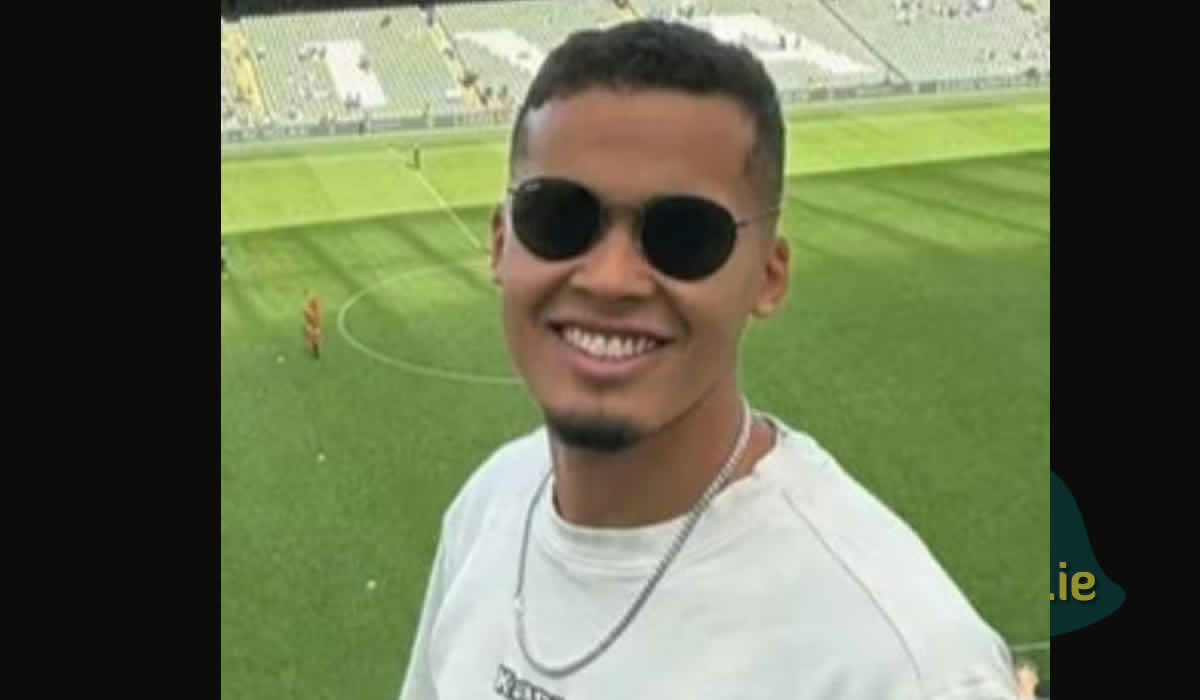
Andre Oliveira is a 26‑year‑old Brazilian delivery rider who was brutally attacked along Dublin’s Royal Canal while working a shift. He was struck in the head and robbed of his phone and bike by a group that included teenagers, leaving him with a serious brain injury and other significant trauma. His case has become a stark symbol of how vulnerable migrant delivery workers are on Dublin’s streets, and has sparked outrage about youth violence, weak consequences, and the safety of those who keep the city running.
More about Andre
Andre moved from Brazil to Dublin to work hard, save money and build a better life with his partner. He had recently bought a new bike to increase his earnings, a major investment that was stolen in the same attack that left him in hospital. Friends and supporters describe him as a quiet, hard‑working young man who focused on his job and supporting his family.
After the attack, Andre was left with a brain haemorrhage that required emergency surgery at Beaumont Hospital, along with a fractured shoulder and other injuries that will take months or even years to fully heal. You can support him and his partner directly through the official GoFundMe:
The attack on the Royal Canal
The assault happened at night on a section of the Royal Canal Way near Cabra, a route commonly used by cyclists, runners and delivery riders. Andre was travelling with his delivery bag and bike when he encountered a group of young people who surrounded him and attacked. He was struck in the head, knocked to the ground and robbed, with his attackers fleeing with his e‑bike and mobile phone.
Some members of the group, which included teenagers, reportedly laughed and recorded the assault on their phones as Andre was beaten and robbed instead of helping or calling emergency services. He was left seriously injured on the ground until others found him and alerted paramedics, by which time he had suffered a life‑threatening brain injury that demanded urgent surgery.
Unruly teens and antisocial behaviour
Andre’s case has intensified long‑standing concerns about unruly teens and antisocial groups in parts of Dublin, especially along canal paths and in central areas where delivery riders frequently travel. Riders, runners and ordinary pedestrians have spoken about groups of youths blocking paths, throwing objects, shouting abuse and sometimes escalating to physical assaults and robberies.
A recurring pattern in these accounts is the role of phones and social media: violence is filmed and shared, turning assaults into “content” rather than deterring them. This normalises and even glamorises attacks, while those most exposed to risk are often migrants working late hours on bikes and motorbikes to make ends meet.
Lack of prosecutions and real punishment
Public anger around Andre’s attack is closely tied to frustration with how the justice system deals with violent youth crime. When groups of teenagers are involved, investigations can be complex, and there is often little visible information about arrests, charges or sentences, which fuels a sense of impunity. At the time of the most recent coverage, Gardaí were investigating the group believed to be involved in Andre’s assault, using video evidence and witness information, but there has been no public confirmation yet of prosecutions or convictions.
For workers like Andre, one moment of group violence can mean life‑changing injuries, permanent trauma and total loss of income, while those responsible may face limited or delayed consequences. This gap between the harm inflicted and the visible punishment contributes to a wider perception that serious youth violence is not being treated with the urgency or severity it deserves, particularly when victims are migrant workers.
How he is coping now and what’s next
Following the attack, Andre underwent emergency brain surgery and was placed in intensive care. Updates shared through Irish media in early December say that he is still in ICU, with his condition described as serious but stable enough for doctors to plan ongoing care and rehabilitation. He faces an uncertain recovery that may involve further neurological assessment, physiotherapy and a long period in which he is unable to work.
For Andre and his partner, this means not only emotional and physical hardship but also the sudden loss of their only income and new expenses linked to long‑term care. Supporters stress that messages of solidarity and donations through the GoFundMe have been a vital lifeline, helping with immediate living costs and future recovery needs. Anyone wishing to help can donate at the following:
Support for André Oliveira
Other Brazilian riders attacked in Dublin
Andre’s story is part of a much wider pattern affecting Brazilian and other migrant delivery riders in Dublin. Riders have repeatedly reported assaults, robberies and harassment while working, especially at night and in areas with little visible policing. Many Brazilians in the gig‑economy say they feel essential to the city’s daily life but largely unprotected when it comes to their safety on the streets.
In 2024, Brazilian rider Felipe Carvalho spoke publicly about being attacked and robbed in Dublin city centre, describing how his phone was taken and how riders regularly encounter verbal abuse, threats and physical intimidation while on the job. You can read more about Felipe’s experience and wider dangers facing riders here:
“Out of control”: Riders open up about dangers of delivery work in Dublin
Another Brazilian rider, Caio Benicio, became internationally known in November 2023 when he intervened to stop a knife attack outside a Dublin school, using his motorbike helmet to subdue the attacker and protect children and parents. His story underlined both the courage and the risk faced by riders, many of whom are migrants working long hours in precarious conditions. More on his case and subsequent activism can be found at Brazilian delivery driver intervenes in knife attack in Ireland and “It was pure instinct”: Brazilian Deliveroo driver tells of moment he stopped school attack.
Taken together, these stories show a city that relies heavily on migrant riders, many of them Brazilian, while failing to guarantee their safety. Andre’s case has become a rallying point for calls for tougher action on violent youths, better protection for riders, and real accountability when life‑changing attacks occur.
Update from Andre
In comments relayed through interviews before his condition worsened, Andre expressed both his shock at the attack and his sadness at what it revealed about life in Dublin. He said that he and his partner had come to Ireland to work, live quietly and feel safe, summing it up with the line: he had believed they “were safe here” until the night of the assault.
His partner has since spoken on RTÉ Radio 1 about the impact of the attack, describing the fear, uncertainty and financial pressure they now face while he lies in ICU. The interview gives a powerful, human picture of what this violence means beyond headlines, and can be heard here:
Partner of Brazilian man who was brutally assaulted while working as delivery driver


